
Photodynamic Therapy (PDT) for Precancerous Skin Lesions
If you have been told you have actinic keratoses — or if you are simply concerned about years of sun exposure — photodynamic therapy may be one of the most effective tools available to protect your skin before those lesions have the chance to progress into something more serious. At Swann Dermatology, our team offers comprehensive skin cancer prevention and management, including PDT as a proven, in-office treatment for precancerous skin lesions.
What Is Photodynamic Therapy?
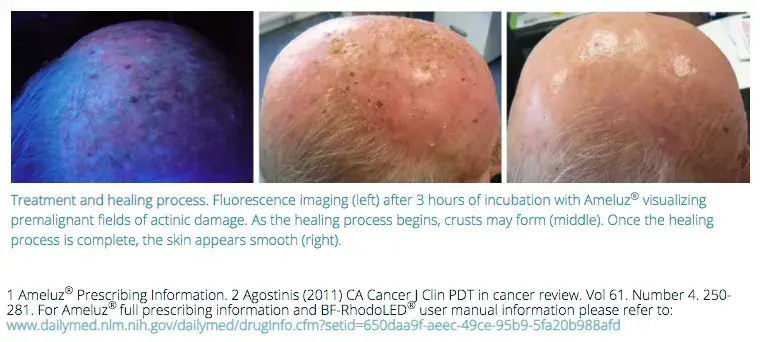
Photodynamic therapy, commonly called PDT, is a non-surgical, in-office procedure that uses a topical medication and a targeted light source to selectively destroy precancerous cells. The treatment relies on a photosensitizing agent called aminolevulinic acid, or ALA, which is applied directly to the skin.
Who Is a Good Candidate for PDT?
PDT is best suited for patients with a higher burden of actinic keratoses — generally those with more than 15 lesions — particularly on the face or scalp. It is also a strong option for patients who have demonstrated a pattern of developing new precancers over time, suggesting an elevated risk for future skin cancer development.
Because PDT can address both visible lesions and subclinical damage that isn’t yet apparent, it offers a meaningful advantage for patients who are managing widespread sun damage rather than isolated spots.
How Does PDT Compare to Other Precancer Treatments?
PDT is generally considered comparable in effectiveness to topical chemotherapy options such as 5-fluorouracil (5-FU), and many patients find it more comfortable to tolerate. That said, both approaches have their place, and the providers at Swann Dermatology use PDT and topical treatments in combination when appropriate to give patients the most thorough coverage against future skin cancer development.
Preventing Future Skin Cancer
Treatment of existing precancerous lesions is only one part of a complete skin cancer prevention strategy. At Swann Dermatology, we also offer a carefully selected range of medical-grade sunscreens and cosmeceuticals — products that Dr. Swann himself has evaluated and found effective in minimizing ongoing sun damage. Pairing PDT with a consistent sun protection routine gives patients the best opportunity to slow the development of new actinic keratoses over time.
If you have concerns about sun-damaged skin or would like to explore your treatment options, we encourage you to schedule a skin cancer screening or a consultation with our team.
FAQ's
Does photodynamic therapy hurt?
How many PDT treatments will I need?
What areas of the body can be treated with PDT?
Is PDT covered by insurance?
How is PDT different from laser treatments?
PDT and laser treatments work through different mechanisms. PDT uses a chemical reaction triggered by light to selectively destroy precancerous cells, while laser treatments address skin texture, pigment, and other concerns through concentrated light energy. Your provider can help determine which approach — or which combination — is right for you.